Introduction
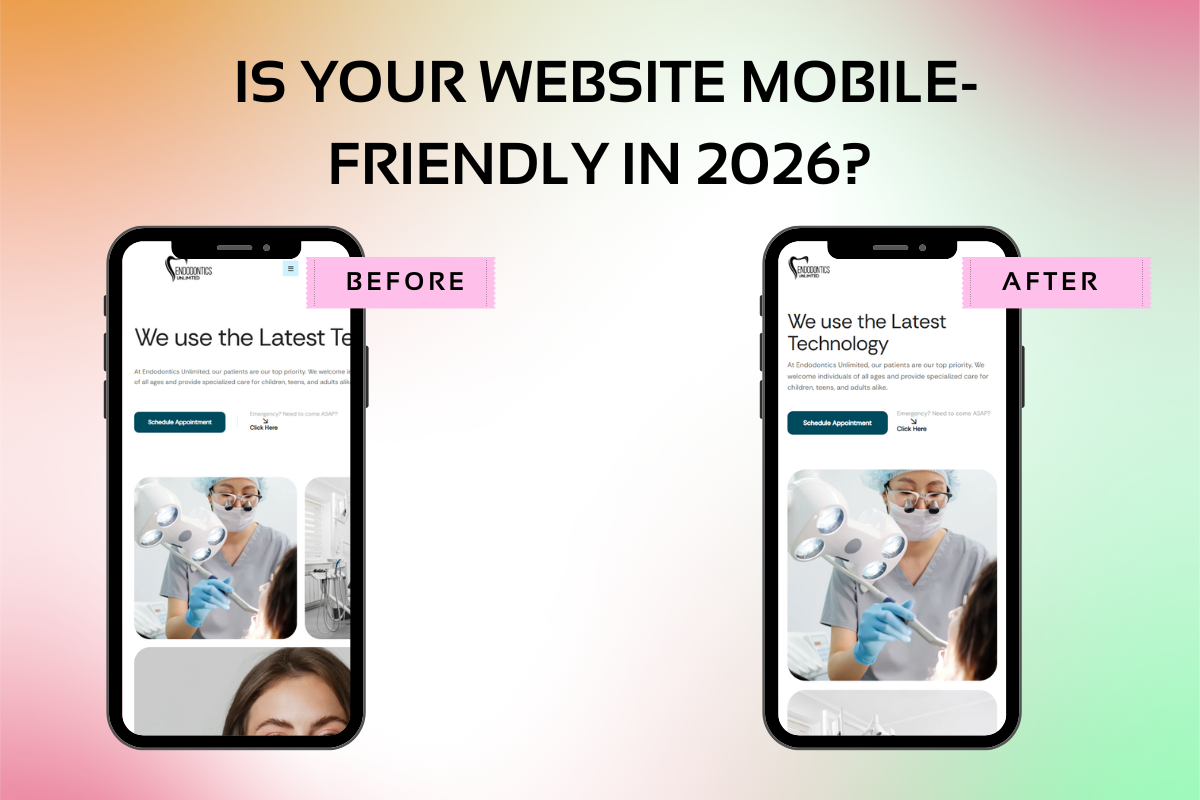
In 2026, having a mobile-friendly website is no longer a “good-to-have”—it’s the foundation of your online presence. With more than 75% of web traffic coming from mobile devices, businesses that fail to prioritize responsive web design are losing customers, credibility, and Google rankings. A modern website must perform flawlessly on every device if you want to compete in today’s digital world.
Google’s Mobile-First Indexing Makes It Mandatory
Google now prioritizes the mobile version of your website when indexing and ranking pages. This means:
- If your mobile site is slow → rankings drop
- If your content isn’t readable → Google reduces visibility
- If your layout breaks → users bounce
A mobile-friendly design directly affects SEO, visibility, and online authority.
Better User Experience = Higher Conversions
People judge your business within seconds of landing on your website. If the mobile layout looks messy or slow, customers instantly leave.
A mobile-optimized website ensures:
- Easy navigation
- Readable text without zoom
- Button sizes that fit thumb-taps
- Fast loading times
- Clean, simple layout
These improvements lead to a higher conversion rate because users stay longer and feel more confident.
Speed is Everything in 2026
Mobile users expect websites to load within 2–3 seconds. Anything slower hurts:
- Engagement
- Lead generation
- Google ranking
- Sales
Optimizing images, reducing unnecessary scripts, and compressing assets are crucial parts of modern mobile-friendly web design.
The Rise of Mobile Shopping & Booking
People now:
- Book appointments
- Shop online
- Read blogs
- Browse services
mostly on their phones.
If your website breaks on mobile, every business action breaks with it.
Conclusion
In 2026, mobile-friendly design is the backbone of business success. A responsive, fast, and user-friendly site creates trust, boosts conversions, and helps you outperform competitors.